References for Fabrics, Drapery, Folds, Textures and what not!

Drawing fabrics can add depth and realism to your artwork, whether you’re sketching clothing, curtains, or any other textile. Understanding how different fabrics behave and appear is crucial for artists aiming to create lifelike images. Fabrics can dramatically influence the overall look and feel of a subject, making it essential to grasp their various characteristics. – Cover image from Grafit Studio
Use the following code to get 20% off on your first purchase CB-D111490F (cubebrush only)


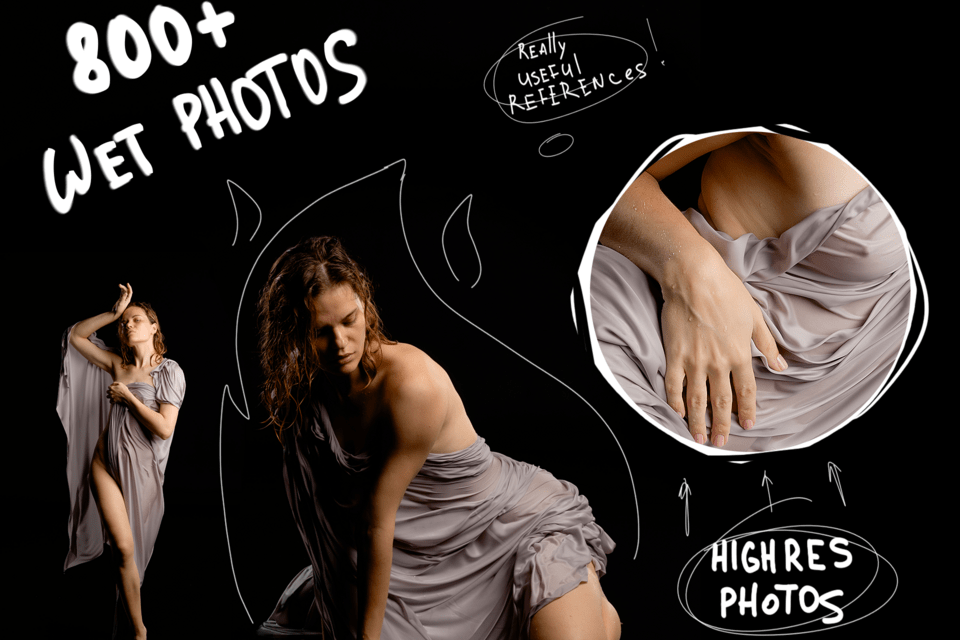






In the blog below, we’ll explore why fabric drawing is important and how mastering it can enhance your artistic skills. We’ll look at basic concepts and prepare you for the detailed techniques that follow in subsequent chapters. By the end of this page, you’ll appreciate the subtle yet significant impact that fabrics can have on your artwork.
Understanding Basic Fabric Types
To draw fabrics effectively, it’s essential to understand the different types of fabrics and their unique properties. Here, we’ll cover four common fabric types: cotton, silk, wool, and linen.
Cotton is a versatile and widely used fabric known for its softness and breathability. It’s relatively easy to draw due to its straightforward texture, making it a great starting point for beginners. Cotton can appear smooth or slightly wrinkled, depending on its weave and use.
Silk is renowned for its luxurious sheen and smooth texture. Drawing silk can be challenging due to its reflective surface, which captures light and shadow in unique ways. Understanding how to depict these qualities will add a touch of elegance to your drawings.
Wool is a thicker fabric with a distinct texture that can add volume and warmth to your artwork. It often appears fuzzy and can be tricky to draw due to its dense, irregular surface. Mastering wool will help you create cozy and realistic textile illustrations.
Linen is known for its natural, slightly rough texture and tendency to wrinkle easily. Drawing linen requires attention to its characteristic creases and subtle imperfections. Capturing these details will bring authenticity to your fabric drawings.
By familiarizing yourself with these basic fabric types, you’ll be better equipped to tackle the challenges of drawing various textiles in your artwork.
Techniques for Drawing Drapery
Drawing drapery involves capturing the way fabric falls and folds over objects or figures. This chapter will guide you through essential techniques to help you illustrate drapery convincingly.
Observing Fabric Behavior: Start by observing how fabric naturally drapes over different surfaces. Notice how it clings, sags, or flows, depending on the underlying structure and the fabric’s weight. Real-life observation or studying photographs can provide valuable insights.
Capturing Flow and Movement: To depict the flow of drapery, use long, continuous lines that follow the fabric’s natural path. Pay attention to the direction of folds and how they interact with each other. Practicing gesture drawing can improve your ability to capture movement and fluidity.
Avoiding Common Mistakes: One common mistake is drawing overly symmetrical or repetitive folds, which can make the fabric look stiff and unnatural. Instead, aim for variety and irregularity in your folds to create a more realistic appearance. Additionally, be mindful of the fabric’s thickness and how it affects the shadows and highlights.
Practical Exercises: To hone your drapery drawing skills, try draping fabric over various objects and sketching the different arrangements. Experiment with different fabric types and observe how their unique properties influence the drapery. Regular practice will help you develop a keen eye for detail and improve your overall technique.
By mastering these techniques, you’ll be well on your way to creating dynamic and realistic fabric drawings that enhance your artwork.
Mastering Folds
Understanding and drawing folds is crucial for creating realistic fabric illustrations. Folds can add depth and dimension to your drawings, making the fabric appear more lifelike. In this chapter, we’ll explore different types of folds and techniques for illustrating them effectively.
If you want to learn more about the different folds then head over to our blog article The art of painting clothing: Understanding and rendering fabric folds
Capturing Textures
Depicting fabric textures accurately can bring your drawings to life and make them more engaging. In this chapter, we’ll explore techniques for capturing various fabric textures and using shading and line work to convey them effectively.
Techniques for Depicting Textures:
- Smooth Fabrics (e.g., Silk): Use long, continuous lines and subtle shading to capture the sheen and smoothness of fabrics like silk. Pay attention to how light reflects off the surface and creates highlights.
- Rough Fabrics (e.g., Linen): Use short, irregular lines and cross-hatching to depict the rough texture of fabrics like linen. Emphasize the fabric’s natural wrinkles and imperfections to create a realistic appearance.
- Fuzzy Fabrics (e.g., Wool): Use a combination of short, soft lines and stippling to capture the fuzzy texture of fabrics like wool. Focus on creating a sense of depth and volume to convey the fabric’s thickness.
Using Shading and Line Work:
Shading is essential for creating the illusion of texture. Use a range of values, from light to dark, to emphasize the fabric’s surface qualities. Experiment with different shading techniques, such as hatching, cross-hatching, and stippling, to achieve the desired effect.
Examples of Textured Fabrics:
- Denim: Known for its diagonal ribbing and slightly rough texture, denim can be depicted using a combination of long, parallel lines and subtle shading.
- Velvet: Characterized by its soft, plush surface, velvet can be illustrated using short, soft lines and a range of values to capture its luxurious texture.
- Satin: With its glossy surface and smooth texture, satin can be drawn using long, continuous lines and careful attention to highlights and shadows.
By mastering these techniques, you’ll be able to capture a wide range of fabric textures and add depth and realism to your artwork.
Practical Applications
Applying your fabric drawing skills to various artistic contexts can enhance your versatility and creativity. In this chapter, we’ll explore practical applications for fabric drawing in fashion illustration, character design, and still life drawings.
Fashion Illustration:
In fashion illustration, accurately depicting fabrics is essential for showcasing clothing designs. Use your knowledge of fabric types, drapery, folds, and textures to create realistic and appealing fashion illustrations. Pay attention to how different fabrics interact with the body and influence the overall look of the garment.
Character Design:
In character design for animation, comics, or video games, fabric drawing skills can help you create believable and visually interesting characters. Consider how clothing and accessories made of various fabrics can reflect a character’s personality, background, and style. Experiment with different fabric combinations to achieve the desired effect.
Still Life Drawings:
Incorporating fabric elements into still life drawings can add depth and interest to your compositions. Drape fabric over objects or use it as a background to create a sense of atmosphere and context. Pay attention to how the fabric interacts with light and shadow, and use your drawing skills to capture its unique qualities.
Tips for Success:
Experiment with Different Techniques: Don’t be afraid to try new techniques and approaches to fabric drawing. Experimentation can lead to exciting discoveries and help you develop your unique artistic style.
Practice Regularly: The more you practice drawing fabrics, the more confident and skilled you’ll become. Set aside time each day to work on different fabric types, folds, and textures.
Observe Real-Life Examples: Study photographs, paintings, and real-life fabric samples to gain a deeper understanding of how fabrics behave and appear. Use these observations to inform and inspire your drawings.
Resources and Tools
To further enhance your fabric drawing skills, it’s essential to utilize various resources and tools. In this chapter, we’ll explore recommended books, online tutorials, and practical tools that can aid in your artistic journey.
Recommended Books:
- “Figure Drawing: Design and Invention” by Michael Hampton: This comprehensive guide covers various aspects of figure drawing, including fabric and clothing. It offers valuable insights and techniques for capturing the human form and the textiles that adorn it.
- “The Artist’s Guide to Drawing the Clothed Figure” by Michael Massen: This book focuses on drawing the clothed figure, providing detailed instructions and examples for illustrating different fabric types, folds, and textures.
- “Drawing and Painting the Nude: Structure, Anatomy and Observation” by Richard G. Hatton: While primarily focused on the nude figure, this book offers valuable techniques for understanding form and structure, which can be applied to fabric drawing as well.
Online Tutorials and Courses:
- YouTube Channels: Many art-focused YouTube channels offer free tutorials on fabric drawing, fashion illustration, and character design. Some popular channels include Proko, Draw Mix Paint, and Sinix Design.
- Online Art Courses: Websites like Udemy, Skillshare, and Domestika offer a wide range of art courses, including fabric drawing and fashion illustration. These courses often provide structured lessons, exercises, and feedback from instructors.
Tools and Materials:
- Quality Pencils and Papers: Invest in a range of graphite pencils and high-quality drawing paper to achieve the best results in your fabric drawings.
- Shading Tools: Experiment with different shading tools, such as tortillons, blending stumps, and kneaded erasers, to create smooth transitions and textures in your artwork.
- Reference Images: Collect reference images of various fabric types, folds, and textures to study and practice from. Websites like Pinterest and Instagram can be valuable resources for finding inspiration and reference material.
By utilizing these resources and tools, you’ll be well-equipped to continue developing your fabric drawing skills and creating stunning artwork.
Conclusion
Throughout this guide, we’ve explored the fascinating world of fabric drawing, from understanding basic fabric types to mastering folds, capturing textures, and applying these skills to various artistic contexts. By now, you should have a solid foundation in fabric drawing techniques and be eager to practice and refine your abilities.
Recap of Key Points:
- Familiarize yourself with different fabric types, such as cotton, silk, wool, and linen, and their unique characteristics.
- Observe and practice drawing drapery, paying attention to how fabric falls and folds over objects and figures.
- Master various fold types, including pipe folds, zigzag folds, and spiral folds, to create depth and realism in your drawings.
- Develop techniques for capturing fabric textures, using shading and line work to convey their unique qualities effectively.
- Apply your fabric drawing skills to fashion illustration, character design, and still life drawings to enhance your versatility and creativity.
Encouragement to Practice Regularly:
As with any artistic skill, practice is essential for growth and improvement. Set aside dedicated time each day to work on your fabric drawing techniques, experiment with different tools and materials, and challenge yourself with new subjects and compositions.
Final Thoughts:
Drawing fabrics can be a rewarding and engaging aspect of your artistic journey. By understanding and mastering the techniques outlined in this guide, you’ll be well on your way to creating dynamic, realistic, and visually appealing artwork that showcases your talent and passion for art. Keep practicing, stay curious, and enjoy the creative process!
If you fancy something other than drawing references for Fabrics, Drapery, Folds, Textures?


Couple Pose References

Of course you will need Males and Females together in your paintings. Couple Pose References just a click away!